CO2 is NOT a "pollutant"
Our atmosphere is STARVED of CO2
It has been argued that carbon dioxide (CO₂) is a “pollutant” and that its emissions must therefore be drastically reduced. In the following, I present a discussion among several scientists titled “Carbon dioxide is not pollution – our atmosphere is actually starved of CO₂,” available through the Narkive Archive, an alternative to the Google Groups archive of the sci.geo.meteorology newsgroup. Although many of these scientists are often labeled as “climate deniers” and as "advancing a false climate change conspiracy theories" for challenging the prevailing view that anthropogenic CO₂ drives global warming, their perspectives offer valuable insights into the ongoing debate. LUX-VERITAS aims to give a voice to such scientists, emphasizing open discussion and the consideration of diverse scientific viewpoints.
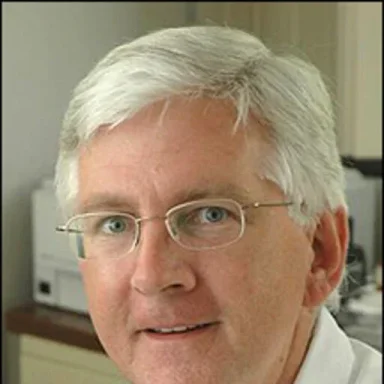
Roy Spencer, Ph.D. Meteorology
Former Senior Scientist for Climate Studies, NASA
"Many chemicals are absolutely necessary for humans to live, for instance oxygen. Just as necessary, human metabolism produces by-products that are exhaled, like carbon dioxide and water vapor. So, the production of carbon dioxide is necessary, on the most basic level, for humans to survive. The carbon dioxide that is emitted as part of a wide variety of natural processes is, in turn, necessary for vegetation to live. It turns out that most vegetation is somewhat 'starved' for carbon dioxide, as experiments have shown that a wide variety of plants grow faster, and are more drought tolerant, in the presence of doubled carbon dioxide concentrations. Fertilization of the global atmosphere with the extra CO2 that mankind's activities have emitted in the last century is believed to have helped increase agricultural productivity. In short, carbon dioxide is a natural part of our environment, necessary for life, both as 'food' and as a by-product."

Robert M. Carter, Ph.D.
Professor Emeritus of Environmental and Earth Sciences, James Cook University
"Carbon dioxide is not a pollutant but a naturally occurring, beneficial trace gas in the atmosphere. For the past few million years, the Earth has existed in a state of relative carbon dioxide starvation compared with earlier periods. There is no empirical evidence that levels double or even triple those of today will be harmful, climatically or otherwise. As a vital element in plant photosynthesis, carbon dioxide is the basis of the planetary food chain - literally the staff of life. Its increase in the atmosphere leads mainly to the greening of the planet. To label carbon dioxide a "pollutant" is an abuse of language, logic and science."
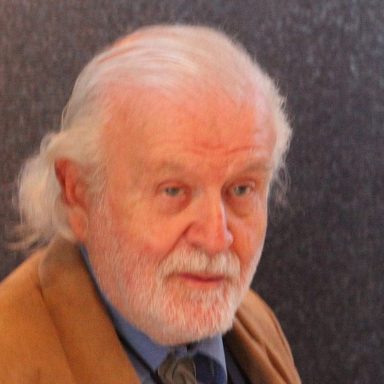
Fred Singer, Ph.D. +
Former Astrophysician, Professor of Environmental Sciences, University of Virginia
"Carbon dioxide is not a pollutant. On the contrary, it makes crops and forests grow faster. Economic analysis has demonstrated that more CO2 and a warmer climate will raise GNP and therefore average income. ... This is especially true of Environmental Protection Agency (EPA), which is primarily a regulatory agency. As air and water pollution disappear as prime issues, as acid rain and stratospheric-ozone depletion fade from public view, climate change seems like the best growth area for regulators. It has the additional glamour of being international and therefore appeals to those who favor world governance over national sovereignty.

Tom V. Segalstad, Ph.D.
Professor of Environmental Geology
University of Oslo
"Carbon and CO2 (carbon dioxide) are fundamental for all life on Earth. CO2 is a colorless, odorless, non-toxic gas. CO2 is product of our breathing, and is used in numerous common applications like fire extinguishers, baking soda, carbonated drinks, life jackets, cooling agent, etc. Plants' photosynthesis consume CO2 from the air when the plants make their carbohydrates, which bring the CO2 back to the air again when the plants rot or are being burned".

Timothy Ball, Ph.D. +
Former climatologist
"C02 is not a pollutant as Gore infers. It is, in fact essential to life on the planet. Without it there are no plants, therefore no oxygen and no life. At current levels, the plants are undernourished. The geologic evidence shows an average level of 1000 ppm over 600 million years. Research shows plants function most efficiently at 1000-2000 ppm. Commercial greenhouses use the information and are pumping C02 to these levels and achieve four times the yield with reduced water use. At 200 ppm, the plants suffer seriously and at 150 ppm, they begin to die. So if Gore achieves his goal of reducing C02 he will destroy the planet."
John R. Christy, Ph.D.
Climate Scientists, University of Alabama
"CO2 is not a pollutant. In simple terms, CO2 is plant food. The green world we see around us would disappear if not for atmospheric CO2. These plants largely evolved at a time when the atmospheric CO2 concentration was many times what it is today. Indeed, numerous studies indicate the present biosphere is being invigorated by the human-induced rise of CO2. In and of itself, therefore, the increasing concentration of CO2 does not pose a toxic risk to the planet".
Felis vitae efficitur
Lorem ipsum dolor sit amet, consectetur adipiscing elit. Nulla euismod condimentum felis vitae efficitur. Sed vel dictum quam, at blandit leo.
William Happer, Ph.D.,
Professorship at Princeton University
"...if you get one degree of warming by doubling the CO2, so, going from 400 ppm to 800 ppm, ... then to get another one degree of warming you have to double ... i.e. 1,600 ppm..." - min. 7.28
"...we are in a CO2 famine"... - min. 10.35
Freeman Dyson, Ph.D.,
Professorship at Princeton University
"...climate models are excellent tools of understanding climate, but they are bad tools of predicting it..." min. 10:45
"...CO2 is so beneficial in many ways, that it would be crazy to try to reduce it..." min. 15:15
Patrick Moore, Ph.D.
Greenpeace founder
"...CO2 is the most important nutrient for all life on Earth..." min. 0:11
"...CO2 is a greenhouse gas, but it is not known how strong it is, in terms of chancing the Earth's temperature..." min. 0:40
Richard Lindzen, Ph.D.,
Profesorships at MIT, Harvard and Chicago
Lorem ipsum dolor sit amet, consectetur adipiscing elit. Nulla euismod condimentum felis vitae efficitur. Sed vel dictum quam, at blandit leo.

Quasi architecto
Lorem ipsum dolor sit amet, consectetur adipiscing elit. Nulla euismod condimentum felis vitae efficitur. Sed vel dictum quam, at blandit leo.
Nemo enim
Lorem ipsum dolor sit amet, consectetur adipiscing elit. Nulla euismod condimentum felis vitae efficitur. Sed vel dictum quam, at blandit leo.
Sed ut perspiciatis
Lorem ipsum dolor sit amet, consectetur adipiscing elit. Nulla euismod condimentum felis vitae efficitur. Sed vel dictum quam, at blandit leo.
Quasi architecto
Lorem ipsum dolor sit amet, consectetur adipiscing elit. Nulla euismod condimentum felis vitae efficitur. Sed vel dictum quam, at blandit leo.
Nemo enim
Lorem ipsum dolor sit amet, consectetur adipiscing elit. Nulla euismod condimentum felis vitae efficitur. Sed vel dictum quam, at blandit leo.